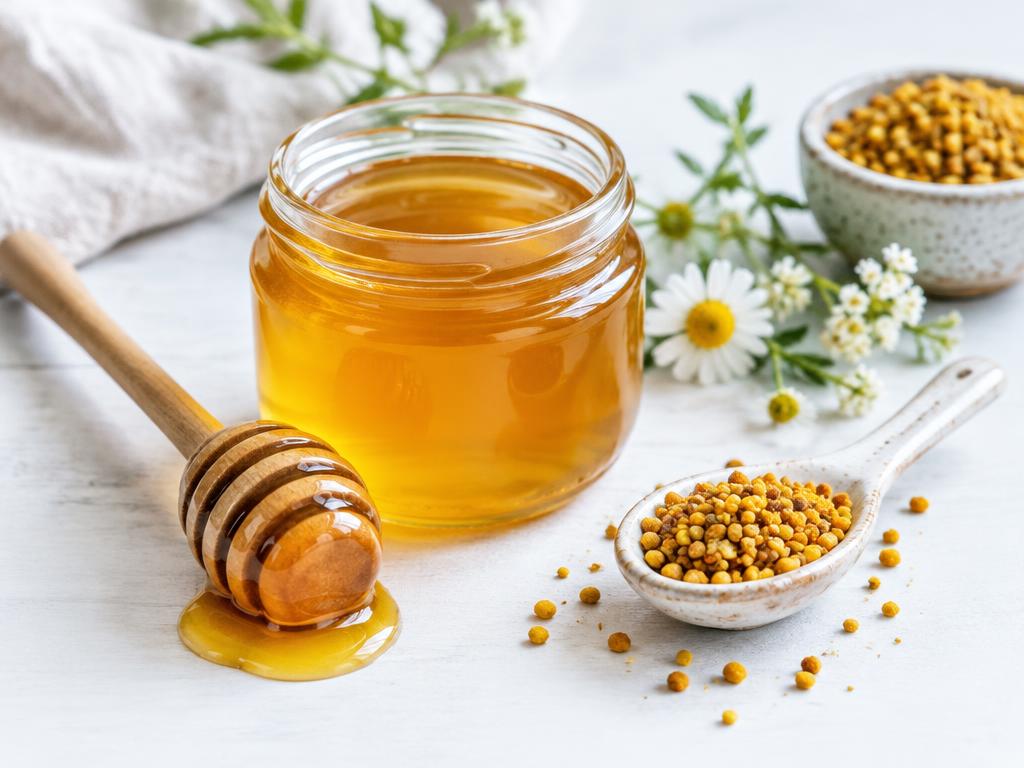
Honey and bee pollen often appear in conversations about natural wellness. Their appeal is easy to understand, but “natural” does not mean necessary, risk-free, or proven to treat a health problem. Treat them as optional additions, not essential parts of a balanced canine diet.
Honey: a sweet extra
Honey is a concentrated source of sugar. Small amounts can be an occasional treat for some healthy adult dogs, but it is not a meaningful replacement for a complete food. Its calories still count, especially for a dog managing weight. The AKC advises against honey for diabetic dogs and against raw honey for puppies or immunocompromised dogs because of possible botulism spores. Read the AKC’s honey guidance.
Will local honey help seasonal allergies?
Evidence that eating honey reliably treats a dog’s seasonal allergies is lacking. The pollen present in honey may not be the allergen affecting your dog, and feeding it is not the same as veterinarian-directed allergy immunotherapy. Persistent itching, ear trouble, or paw licking calls for an assessment, not an experiment with increasing honey portions. See the discussion of allergy claims.
Bee pollen: keep expectations realistic
Bee pollen is collected pollen sold in granules or supplement blends. Its composition varies. There is not enough established canine clinical evidence to present it as a treatment for allergies or an immune-system booster. It does not supply a predictable nutritional correction for an incomplete diet.
Because a pollen product introduces additional ingredients and possible allergens, discuss it with your veterinarian before use, especially if your dog has known sensitivities. Avoid starting several supplements together: it makes it harder to identify which one caused a reaction.
A practical decision
- Decide what purpose the addition serves beyond a marketing claim.
- Read the ingredients and avoid sweetened blends with unsafe additives.
- Ask whether your dog’s health history makes it unsuitable.
- Stop and seek veterinary advice if a new addition causes symptoms; facial swelling or breathing difficulty needs urgent care.
Your dog can have a complete, satisfying diet without either honey or pollen. If you choose to offer an extra, keep the main meal and your dog’s individual needs at the center of the decision.