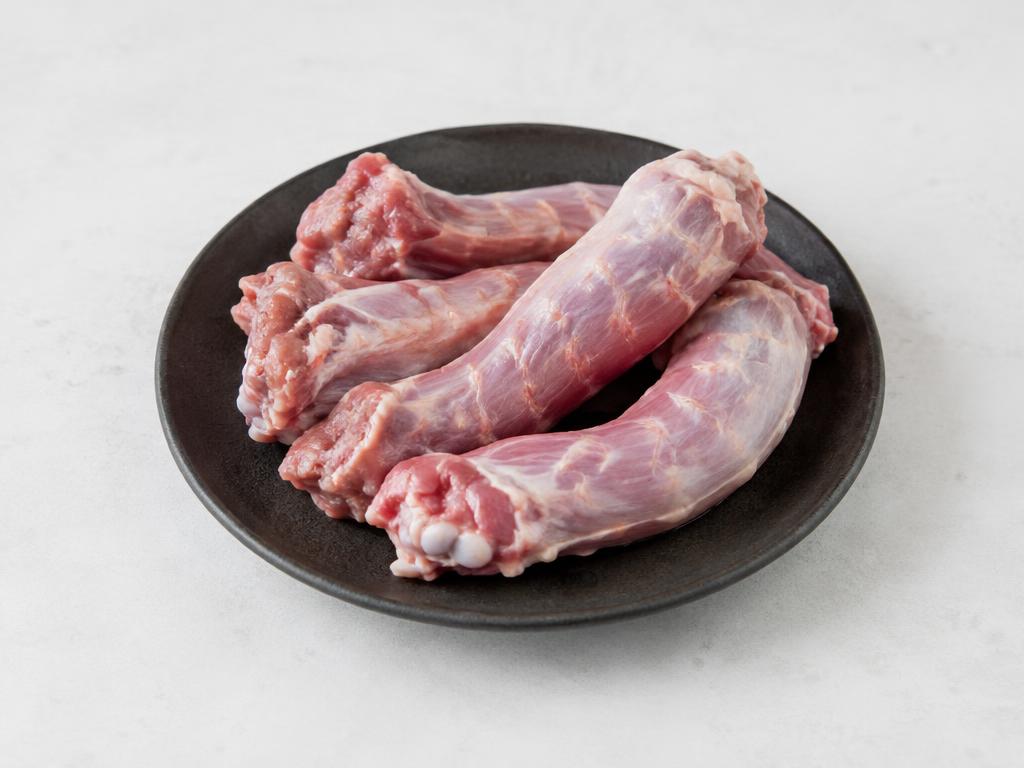
“Edible bone” is a raw-feeding term, not a safety certification. It usually describes bones intended to be consumed rather than simply gnawed. Before offering any bone, consider your dog’s chewing habits, dental health, and overall diet, and understand that no whole bone is risk-free.
Edible and recreational bones
Raw-feeding discussions often describe relatively softer poultry bones as edible and large, dense weight-bearing bones as recreational. These categories do not guarantee that a dog can safely chew or digest them. A dog that gulps food may swallow a piece whole; a powerful chewer may fracture a tooth.
Ground bone has a different role
In some commercial recipes, finely ground bone is an ingredient contributing minerals such as calcium and phosphorus. What matters is the adequacy of the finished recipe, not simply whether bone appears on the ingredient list. Adding extra bones or calcium to a complete food can upset the diet’s balance, particularly during growth.
Know the hazards
Whole bones can cause fractured teeth, choking, digestive obstruction, or injury. Raw bones can also carry pathogens. Cooked bones can splinter and should not be offered. Supervision does not eliminate these risks. Read the AKC’s overview of bone hazards.
- Ask your veterinarian whether a bone is appropriate for your individual dog.
- Do not use bones as a replacement for dental care.
- Keep cooked bones and discarded carcasses out of reach.
- Consider a veterinarian-recommended alternative matched to your dog’s size and chewing style.
When to seek help
Difficulty breathing, repeated gagging, vomiting, abdominal pain, or straining after chewing a bone warrants urgent veterinary advice. If you know your dog swallowed a bone, call your veterinarian rather than waiting for symptoms or trying to induce vomiting yourself.
For nutrition, choose a properly formulated food. For enrichment, choose an activity or chew with your dog’s specific behavior in mind. They are different decisions, even when a product is marketed for both.